The Kanté Rule: How Draft Fantasy Rewarded Defensive Work Before FPL
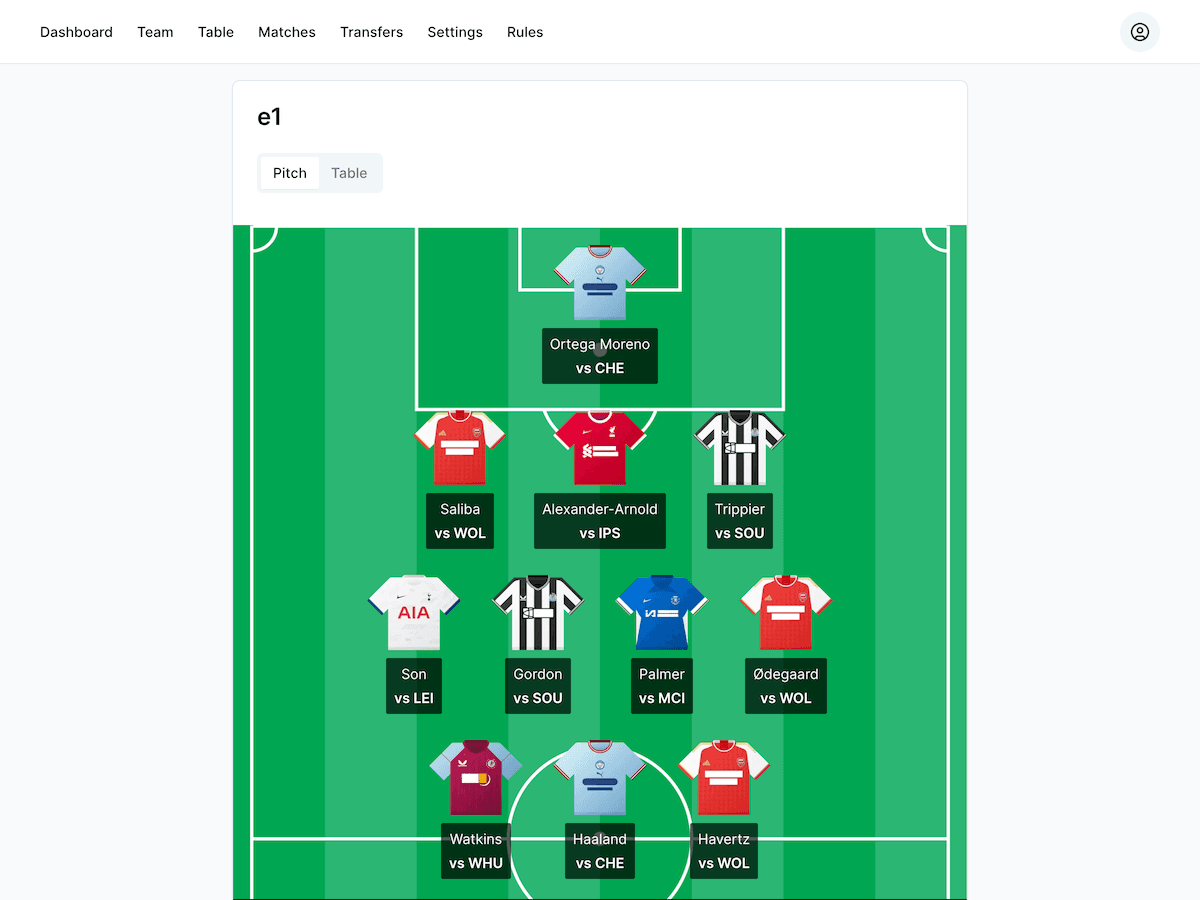
In July 2017, Draft Fantasy published an article about an “innovative new feature” called the Kanté Rule. It rewarded players for defensive work including tackles, interceptions and recoveries.
Eight years later, official Fantasy Premier League introduced defensive contribution points for the 2025/26 season.
The formulas are not the same, and we are not claiming that Draft Fantasy invented defensive scoring across every fantasy game. But the record is clear: Draft Fantasy was explicitly rewarding this work through its Kanté Rule in 2017, eight years before it became part of official FPL.
Today you can still create a Draft Fantasy league with custom scoring, including configurable defensive contributions and position-specific values.
Why the Kanté Rule existed
Traditional fantasy scoring has always made goals, assists and clean sheets easy to recognise. That leaves an obvious gap.
A defensive midfielder can be the best player on the pitch without producing any of those returns. Winning the ball, intercepting passes and stopping attacks may decide the real match while producing little fantasy value.
N'Golo Kanté represented that problem perfectly. His influence did not depend on scoring every week, so we named the scoring option after him.
Our August 2017 scoring article made the argument directly: if fantasy games had the underlying statistics, they could recognise more of what happened during the 90 minutes. It named Kanté, Oriol Romeu and Idrissa Gueye as influential players whose work should be rewarded.
The evidence from 2017
The first surviving Draft Fantasy article about the rule was published on 18 July 2017.
That original Kanté Rule article analysed Chelsea signing Tiémoué Bakayoko and described how tackles, interceptions and recoveries would make defensive midfielders more valuable.
A second article on 9 August 2017 documented the available scoring choices and debated standard scoring against a more detailed system. By October, we were publishing Kanté Rule player rankings, led—appropriately—by Kanté himself.
This was not an idea added retrospectively to fit the current conversation. It was a live scoring system used by Draft Fantasy leagues, supported by contemporary articles explaining how managers could use it.
How the original scoring worked
The earliest published version awarded points for combinations of tackles and interceptions, with recoveries also recognised. The thresholds subsequently changed as the scoring was refined, and Draft Fantasy later expanded into fully customisable values.
That evolution is important. The Kanté Rule was a product idea, not one permanent universal formula:
| Scoring system | Defensive actions | How it is configured |
|---|---|---|
| Draft Fantasy's original Kanté Rule | Tackles, interceptions and recoveries | Published thresholds that evolved over time |
| FPL defensive contributions in 2026/27 | CBIT for defenders; CBIRT for midfielders and forwards | Fixed positional thresholds and a two-point match cap |
| Draft Fantasy custom scoring today | Defensive contributions plus individual actions including tackles and interceptions | League creators set values by position |
Current Draft Fantasy custom scoring allows a league creator to decide how much different football actions matter. That flexibility is the natural continuation of the original idea: leagues do not all need to value players in exactly the same way.
How official FPL defensive contributions compare
Official FPL introduced defensive contribution points in 2025/26 and confirmed that they remain for 2026/27.
Under the official 2026/27 defensive contribution rules:
- defenders receive two points after reaching 10 combined clearances, blocks, interceptions and tackles;
- midfielders and forwards receive two points after reaching 12 combined clearances, blocks, interceptions, tackles and ball recoveries; and
- defensive contribution points are capped at two per player per match.
The modern FPL mechanic and the Kanté Rule are therefore related in purpose, but not interchangeable. Both make defensive work visible. FPL uses one fixed position-based system, while Draft Fantasy lets each league shape its own scoring.
For the current thresholds, selection principles and player data, read our FPL defensive contributions guide or use the free FPL DEFCON tool.
Why custom defensive scoring changes a draft
Custom defensive scoring does more than add a few points. It changes which players are valuable.
Without it, managers naturally chase the same attackers, set-piece takers and attacking defenders. Rewarding ball-winning can deepen the player pool and give central midfielders a meaningful role in fantasy squads.
That is especially useful in a draft league. Every Premier League player can belong to only one manager, so deeper leagues need more viable options than a game where everybody can own the same premium players.
One group may prefer a light reward that acts as a tiebreaker. Another may want elite defensive midfielders to rank alongside attacking players. Draft Fantasy's position-specific scoring lets both groups build the competition they want.
Create a Premier League league and set your own scoring.
The idea still matters
FPL's adoption of defensive contributions validates the problem the Kanté Rule tried to solve: fantasy football is more interesting when different types of real football performance can matter.
It also gives managers a new analytical question. Total actions are not enough when points are awarded at a match threshold. Managers need to understand roles, minutes and how often a player actually qualifies. Our new FPL tools hub is designed to make those decisions easier.
If you are returning for the new season, Draft Fantasy for the 2026/27 Premier League is live. Choose an auction or snake draft, give every player one owner and decide how your league rewards defensive work.
Ready to bring Kanté points into your own competition? Start a custom-scoring Draft Fantasy league.